
|
3 Cold Soups That Can Help You Cool Off With a Health Kick
Growing up in South America, all the soups that I have ever known were always served warm or piping hot. Walking around in the different areas of Peru, you would see soups being served straight from the pot right on to the bowl. The idea of allowing a soup to become cold was just unheard of. About a few years ago, I was told about gazpacho, a cold soup that originated from the Andalusian region in Spain. Gazpacho is made of raw vegetables, usually with a tomato base, mixed with different herbs and spices.
Hearing about this for the first time, it gave me the heebie-jeebies. Although I was hesitant, I tried gazpacho during my first visit to Spain. Needless to say, after a few trips and many tastings, I was converted into a gazpacho lover, appreciating it as the perfect refresher on a hot day. Aside from it being a popular item, it is a nutritious, delicious, energy boosting dish that can be made in a variety of ways. I personally use it as a snack, eating it during the day to cure me of that mid-afternoon slump. Given the summer time and the inspiration from my gazpacho experience, I decided to make three different kinds of cold soups. Each one not only highlights a different nutritional benefit from its ingredients, but they also express the different styles that can be made. Here are three refreshing recipes for you to try. Classic Red Gazpacho 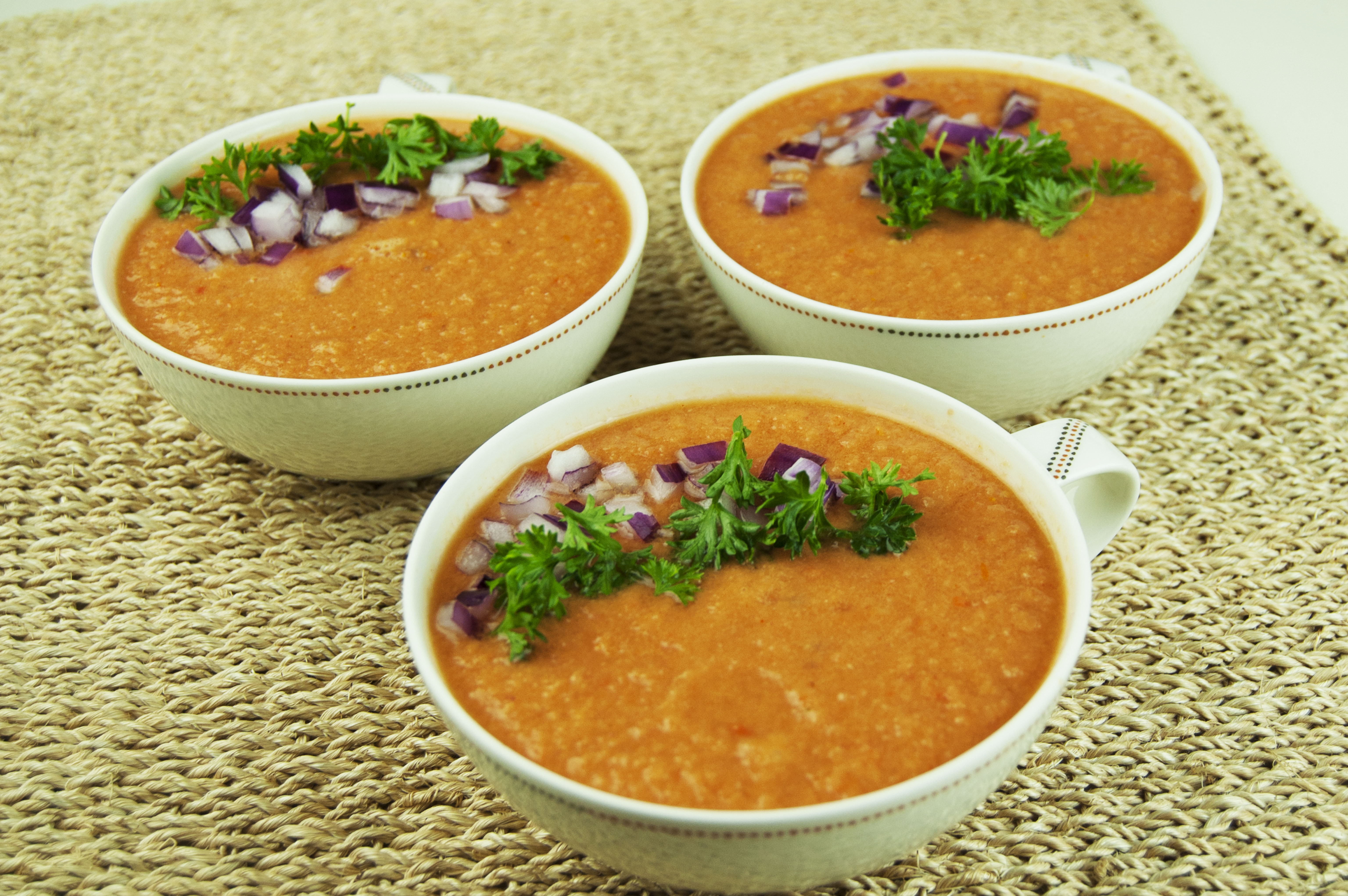 Among the vegetables used for gazpacho, it is the savory fruit, the tomato that adds the most beneficial nutrient in the soup. Tomatoes contain a powerful antioxidant called lycopene. Research has found that lycopene-rich foods can help suppress carcinogens, slow cancer cell growth, and reduce cell damage (1). Specifically, it is the cooked tomatoes that studies have found provide higher levels of lycopene versus consuming raw tomatoes (2). Serves: 6 Serving Size: 1 cup Ingredients 1 medium cucumber, chopped 1 small red onion, chopped 1 red bell pepper, chopped 1 pound ripe tomatoes, chopped 1 cup tomatoes, crushed from a can 2 celery stalks, chopped 1 tablespoon garlic, minced ¼ cup + 1 tablespoon red wine vinegar ¼ cup olive oil 1 teaspoons pimento de la vera (sweet Spanish paprika) 2 teaspoons sea salt Directions
Peruvian Gazpacho 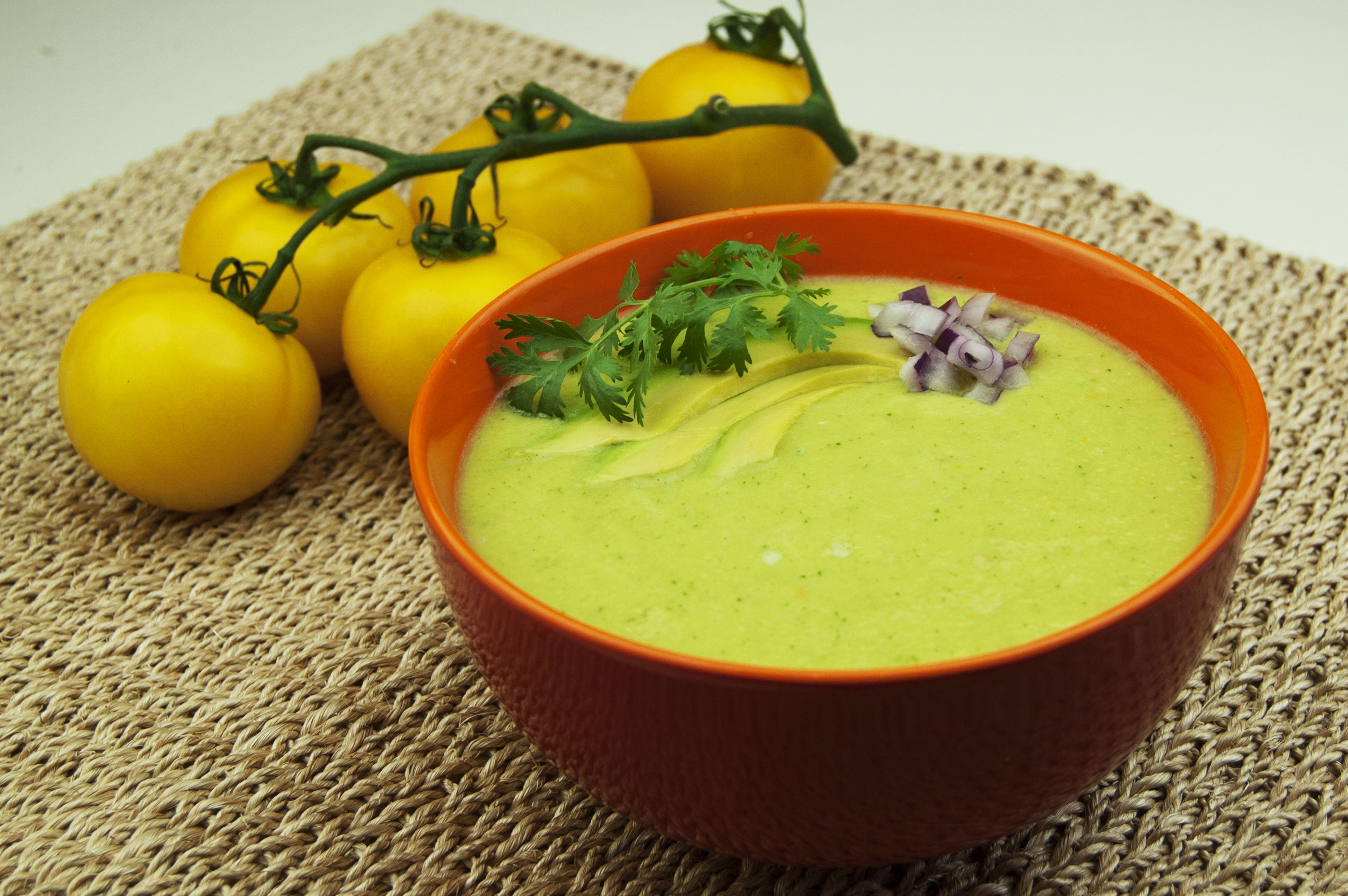 As a native Peruvian and advocate of using Peruvian superfoods, I had to come up with my own version of this soup to give it a nutritional super boost. Here, I use avocado to give the gazpacho a creamy texture. Research has shown that consumption of avocados can decrease blood triglycerides, blood pressure, and increase HDL (the good cholesterol), all of which contribute to a decreased risk of developing cardiovascular disease (3). Mostly vegetables, there are some vitamins and minerals that are fat soluble, meaning they are better absorbed by the body when consumed with fat. Avocado, a healthy fat, acts as a "nutrient booster" in the soup by enabling the body to absorb more fat-soluble nutrients, like beta-carotene and lutein (4). Serves: 7 Serving Size: 1 cup Ingredients 1 medium cucumber, chopped ½ medium onion, chopped 1 pound yellow tomatoes, chopped 1 tablespoon garlic, minced ½ avocado 1 green bell pepper, chopped ½ cup vegetable broth ¼ cup + 1 tablespoon white wine vinegar ¼ cup olive oil 2 tablespoons aji amarillo paste (or other chili paste) 1 tablespoon lime juice 2 teaspoons salt Directions
Purple Potato & Leek Soup 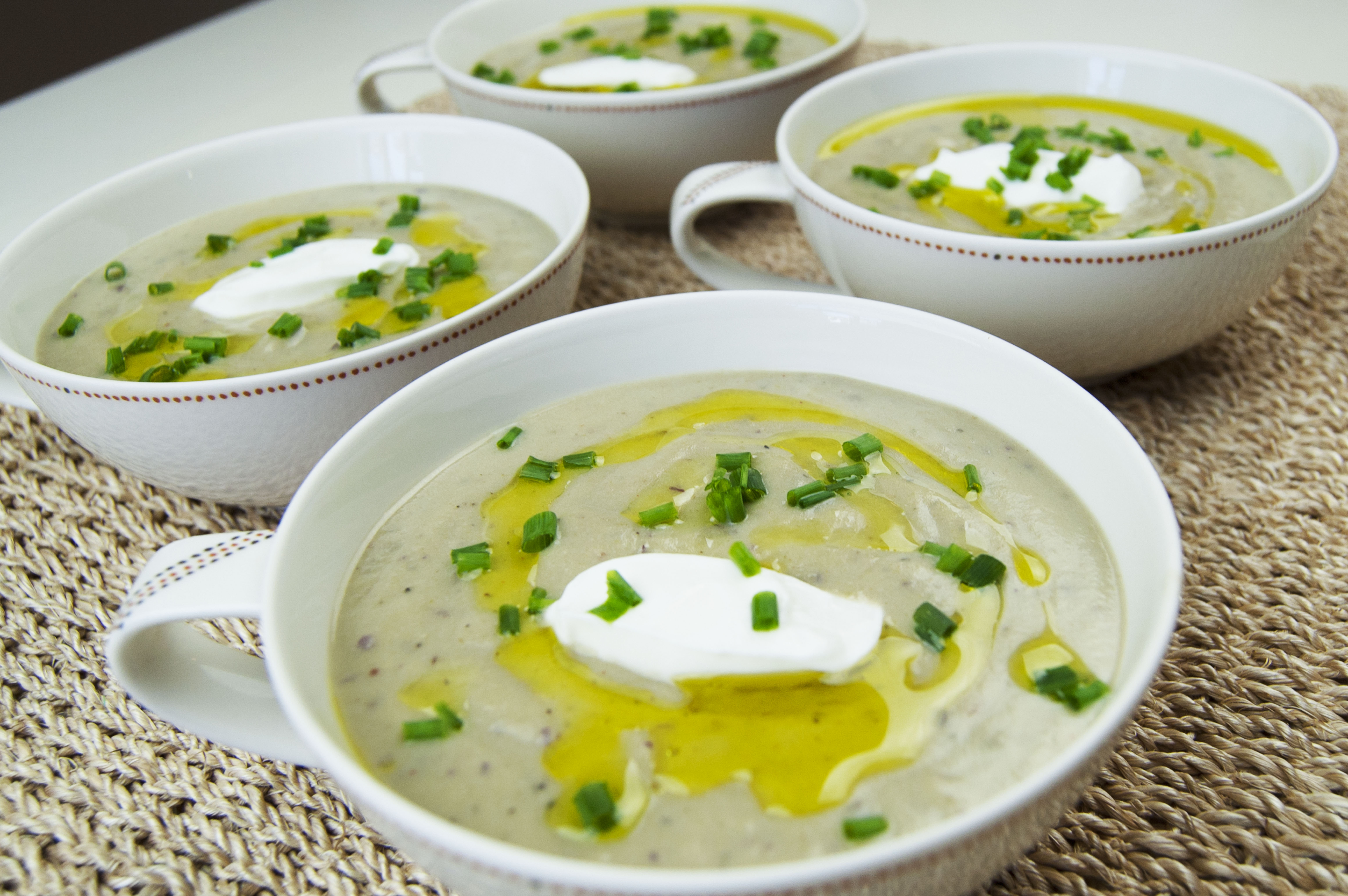 Now, let's change the beat a bit and feature a different kind of cold soup, vichyssoise. Although the origin is still unclear, vichyssoise is a French inspired soup that incorporates potatoes, leeks, and cream, and is usually served cold, but can be consumed hot. To add my own Latin flare, I substituted purple potatoes instead of the original white potato. Purple potatoes have a phytonutrient called anthocyanin, the same phytonutrient that lends to its color. Research has found that anthocyanins have regulatory abilities on blood sugar levels by inhibiting the enzymes that break up glucose. By inhibiting this enzyme, anthocyanins help to control blood sugar rises by slowing down the absorption of glucose into a person's system (5). It also makes purple potatoes a diabetic friendly food. Serves: 8 Serving Size: 1 cup Ingredients 2 tablespoons olive oil 4 large leeks, slices, then washed 1 1/2 pounds purple potatoes, sliced into 1/2-inch rounds 6 cups low-fat milk 1 teaspoon dried thyme 1/2 teaspoon smoked paprika 3/4 cup grated Parmesan cheese Salt and pepper Minced chives and nonfat Greek yogurt for garnish* Directions
All recipes and photos by Manuel Villacorta, MS, RD Manuel Villacorta is a nationally recognized, award-winning registered dietitian/nutritionist with more than 18 years of experience. He is a trusted voice in the health and wellness industry. He is the author of Eating Free: The Carb Friendly Way to Lose Inches, Embrace Your Hunger, and Keep Weight Off for Good (HCI, 2012) Peruvian Power Foods: 18 Superfoods, 101 Recipes, and Anti-Aging Secrets from the Amazon to the Andes (HCI, 2013) and his newest book Whole Body Reboot: The Peruvian Superfoods Diet to Detoxify, Energize, and Supercharge Fat Loss (HCI, 2015). References: 1)Campbell JK, Canene-Adams K, Lindshield BL, Boileau TW, Clinton SK, Erdman JW Jr. Tomato phytochemicals and prostate cancer risk. J Nutr. 2004; 134:3486S-3492S. 2)Giovannucci E. Tomato products, lycopene, and prostate cancer: a review of the epidemiological literature. J Nutr. 2005. Aug;135(8):2030S-1S. 3)Hoffmann, G. & Schwingshackl, L. (2012) Monounsaturated fatty acids and risk of cardiovascular disease: Synopsis of the evidence available from systemic reviews and meta-analyses. Nutrients, Volume 4, pages 1989-2007 4)Byrns, R., Gao, K., Heber, D., Lee, R., Lu, Q., Wang, D., Wang, Y., Zhang, Y. (2010). California Hass Avocado: Profiling of carotenoids, tocopherol, fatty acid, and fat content during maturation and from different growing areas. Journal of Agricultural and Food Chemistry. Volume 57, Pages 10408-10413 5)Hamouz, K., Lachman, J. (2005). Red and purple coloured potatoes as a significant antioxidant source in human nutrition- a review. Plant, Soil, and Environment, Volume 51, pages 477-482 -- This feed and its contents are the property of The Huffington Post, and use is subject to our terms. It may be used for personal consumption, but may not be distributed on a website.  More... |
| All times are GMT. The time now is 10:04 PM. |