
|
|
|||||||
| Register | FAQ | Calendar | Today's Posts | Search |
 |
|
|
Thread Tools | Search this Thread | Display Modes |
 04-07-2012, 03:13 AM
|
|||
|
|||
 Obama Embraces National Security as Campaign Issue

|
|
#1
08-02-2015, 06:35 AM
|
|||
|
|||
Say It Ain't So, Joe
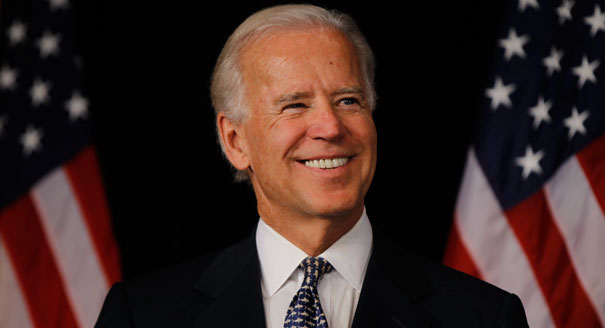 A Biden for President campaign is probably doomed. Not because of who Joe Biden is but because of what he is: vice president of the United States. Voting for Biden would mean voting for a third term for Barack Obama. When the incumbent President isn't running for re-election, the vice president typically runs. And he usually wins his party's nomination: Richard Nixon in 1960, Hubert Humphrey in 1968, Gerald Ford (after acceeding to the presidency) in 1976, George H.W. Bush in 1988, Al Gore in 2000. Four years after Jimmy Carter was defeated for re-election, Walter Mondale ran and got the Democratic Party nomination in 1984. Eight years after the first President Bush was defeated, Dan Quayle ran, briefly, for the 2000 nomination and found that was impossible to compete with the former President's son. The great exception was Dick Cheney in 2008, who declined to run after two terms of George W. Bush. Harry Truman's vice president, Alben Barkley, briefly ran for President in 1952 when Truman declined to run for another term. Barkley left the race after labor leaders -- who had a lot more power over the Democratic Party in those days -- said they would not support him because he was too old (74) and in questionable health. Those same considerations persuaded Cheney (age 67) not to run in 2008. Why does the vice president usually win the nomination? Because nominations are controlled by partisans. Partisans value loyalty. The quality that makes for a good vice president is loyalty. But notice something about that list. Every vice president who got the nomination -- save one -- was defeated in the general election. That's because the electorate as a whole does not value loyalty. They value independence. They want a President who is his own man. A vice president is never his own man. In 1960, Nixon was Eisenhower's man. It took Nixon eight years out of power to become his own man. Humphrey was LBJ's man. Ford was Nixon's man (especially after he pardoned Nixon). Mondale was Carter's man. Gore was Clinton's man. 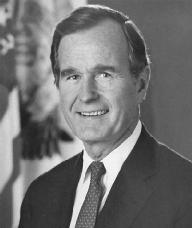 The great exception? Ronald Reagan's vice president, George H.W. Bush -- the first sitting vice president to be elected President since Martin Van Buren in 1836. 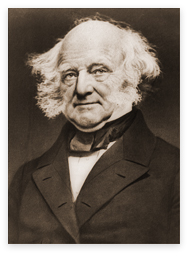 Van Buren represented a third term for Andrew Jackson just as George H.W. Bush represented a third term for Reagan. In 1988, Democrats were shocked to learn that voters really did want a third term for Reagan. Reagan's job approval ratings in October 1988 were close to 60 percent. Obama's job rating is now 46. In the fall of 1988, the nation's economic growth rate was 4.2 percent. Last quarter's growth rate was 2.3 percent. In October 1988, 70 percent of Americans said things were going well in the country. In May 2015, 47 percent said things were going well. While the country is clearly better off than it was in 2008, it does not look like Obama will leave office on a high the way Reagan did. Any Democrat who gets the nomination next year will face the charge that he, or she, represents a third term for Obama. With Biden, the charge will stick. He's Obama's man. Of course, Hillary Clinton was Obama's secretary of state. Republicans are certain to argue that electing Clinton would be a third term for Obama. The difference is that Clinton has a much stronger personal brand than Biden does. She is more strongly connected to an earlier Democratic President who is, today, the most popular living figure in American politics. Clinton ran against Obama for the 2008 Democratic nomination. So did Biden. But Clinton stayed in the race until the end. Instead of earning resentment from Democrats, she earned admiration for her fortitude. If Biden were to compete with Clinton for the Democratic nomination, he would split the Democratic Party establishment: Obama loyalists versus Clinton loyalists. When that happened in 2008, Obama defeated Clinton by a margin of fewer than 42,000 primary and caucus votes (0.1 percent of the total). African-American Democrats were crucial for Obama's victory. Obama got 4.7 million more black votes than Clinton in the 2008 primaries. Despite his ties to Obama, Biden is unlikely to hold the loyalty of all those black voters against Hillary Clinton. True, there is genuine public sympathy for Biden over the tragic loss of his son this year. But it may not be easy to translate that sympathy into votes. Clinton has her own problems, of course. Most voters say she is not honest and trustworthy. And she doesn't have either her husband's or Barack Obama's skill as a campaigner. She's not ``a natural.'' But her problems look relatively small next to Biden's. The vice presidency is both a blessing and a curse. It's a blessing if you are running for your party's nomination. Then it turns into a curse when you run in the general election. -- This feed and its contents are the property of The Huffington Post, and use is subject to our terms. It may be used for personal consumption, but may not be distributed on a website.  More...
|


 Linear Mode

